Posted on

The Role of Fantasy Map Icons in Antique and Fantasy Cartography Assets

Wonderdraft assets, fantasy map icons like king figure, medieval shops, vintage cartography assets

Exploring the Utility, Culture, and Aesthetic of Vintage Fantasy map icons.

Maps have always been more than simple tools for navigation; they are artistic expressions of power, knowledge, and imagination. From the richly detailed mappa mundi of the Middle Ages to the intricate fantasy map assets found in role-playing games and novels, cartographers have used symbols to make maps both visually appealing and functionally intuitive. These symbols serve to identify key landmarks, fortifications, magical sites, and economic centers, making maps an essential narrative device for both real-world explorers and fantasy world-builders.

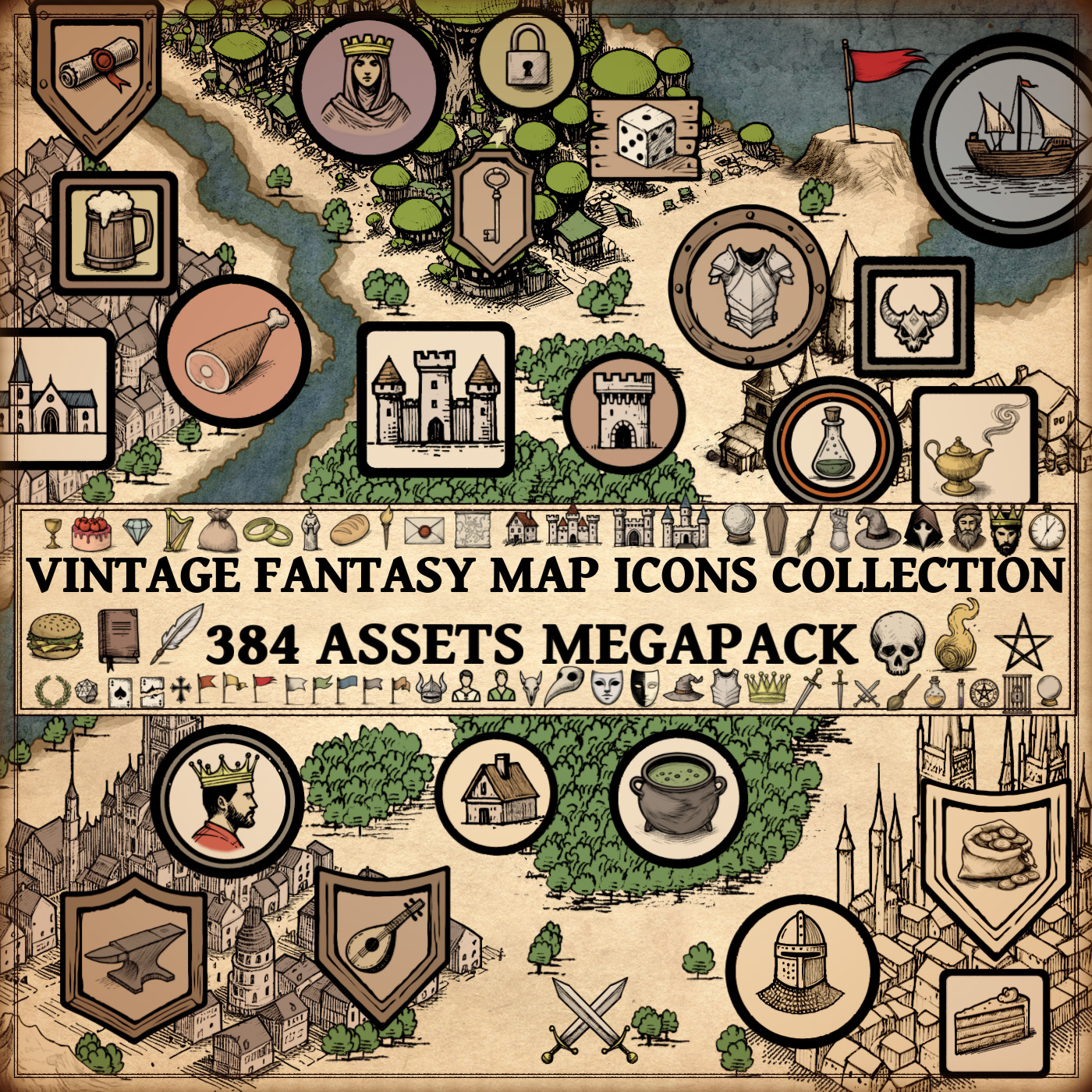
The Fantasy Map Icons Ultimate Collection – POIs Vintage Assets Megapack is a carefully crafted set of Wonderdraft assets designed to capture the aesthetic of antique cartography while offering a broad selection of assets to enhance world-building. With its hand-drawn, vintage style, this collection fits seamlessly into historical and fantasy settings alike.

BUY AND DOWNLOAD The Fantasy Map Icons Ultimate Collection – POIs Vintage assets Megapack here :

Heraldry, Nobility & Leadership in Fantasy Map Icons

Throughout history, the depiction of power and authority has been central to cartography. Medieval maps often marked the dominions of noble families with heraldic symbols, crowns, and fortress icons to represent castles and fiefdoms. This visual shorthand conveyed ownership and influence, much like a coat of arms identified knights on the battlefield. In fantasy map assets, these same principles apply. A kingdom’s capital can be marked with an elaborate crown, while the stronghold of a warlord might be represented by crossed swords or a sigil-bearing shield.

Wonderdraft assets like heraldic shields and noble busts serve to emphasize political territories, defining the borders between rival factions or ancient dynasties. These cartography assets are particularly effective in tabletop RPGs or fantasy novels where world-building is crucial. A player glancing at a map should immediately recognize which areas are under noble rule, where alliances might shift, or where ancient bloodlines still hold sway over the land.

Settlements, Fortresses & Infrastructure in Cartography Assets

One of the most practical uses of fantasy map icons is in marking settlements, from humble villages to grand cities. Antique maps often represented cities with small clusters of buildings or even stylized towers, a convention that remains popular in fantasy cartography assets. The size and complexity of these symbols can indicate a settlement’s importance—while a simple hut might represent an isolated farming community, a grand walled city icon might signify a thriving metropolis or a kingdom’s capital.

Castles and fortresses are equally important in Wonderdraft assets, as they represent military strongholds, centers of power, or ancient bastions of civilization. On many medieval maps, castles were exaggerated in size to reflect their political and strategic significance rather than their actual geographic footprint. This tradition carries over into fantasy map assets, where a fortress icon can indicate a keep teeming with knights, an ancient ruin occupied by bandits, or a cursed citadel shrouded in mystery.

Bridges, roads, and ports also play a vital role in cartography assets. Docks, bridges, and trade routes can transform a static map into a dynamic world where commerce, war, and migration shape the land. A well-placed harbor icon suggests bustling maritime trade, while a marked road hints at caravan routes or dangerous passes where bandits lurk. These fantasy map assets help create a sense of movement and connection between locations, making the world feel alive.

Arcane & Mystical Symbols in Fantasy Map Assets

Fantasy settings thrive on the supernatural, and fantasy map icons play a crucial role in defining the presence of magic, ancient secrets, and arcane forces. Throughout history, maps have featured mythical symbols to represent the unknown—whether it was the sea monsters populating Renaissance maps or the labyrinthine temples of lost civilizations. In a fantasy world, these mystical markers serve as narrative signposts, guiding adventurers to places of wonder and danger.

Pentagrams and occult circles can indicate sites of forbidden knowledge, where ancient sorcerers performed dark rituals or where reality itself bends to eldritch forces. Mystic masks and skull motifs hint at haunted lands, cursed temples, or places where spirits linger. These symbols are especially useful in cartography assets, as they immediately set a location apart as mystical, secretive, or perilous. Whether designing a map for a tabletop RPG or a novel, adding these elements can signal areas of high magic or deep lore without the need for lengthy explanations.

Alchemy and potion bottles are also key elements in many Wonderdraft assets, representing magical academies, enchanters’ shops, or legendary elixirs hidden in forgotten ruins. These symbols not only reinforce the presence of magic but also add a level of world-building depth—does this land value alchemy as a science, or is it feared as heresy? By placing arcane fantasy map icons strategically, a creator can imply entire cultural narratives about how magic is perceived and utilized within the world.

Economy, Trade & Wealth in Wonderdraft Assets

Maps have long been instruments of commerce, marking trade routes, markets, and centers of wealth. In historical cartography, cities known for their riches were often depicted with gold coins, merchant seals, or ornate architectural designs. The Catalan Atlas (1375) famously portrayed the King of Mali holding a golden nugget, emphasizing the region’s wealth and its significance in the gold trade.

In fantasy map assets, gold coins and treasure bags can indicate prosperous trade hubs, legendary hoards, or secret caches of ancient wealth. A well-placed chest icon might suggest a hidden pirate treasure, while stacked coins could signify a thriving economic capital. Dice and playing cards, meanwhile, hint at gambling dens, rogue hideouts, or places where fortune favors the bold. These fantasy map icons provide both practical information and storytelling depth, reinforcing the idea that economic power is as crucial as military might in shaping a world.

Beyond simple wealth, gears and mechanical symbols can represent industrial advancements, clockwork cities, or even steampunk-inspired civilizations. Including such Wonderdraft assets can distinguish technologically advanced regions from more traditional medieval settings, offering visual cues about cultural and technological disparities within the world.

Warfare & Conflict Zones in Fantasy Map Icons

Conflict has shaped both real and fictional landscapes, and maps have long used symbols to represent battlefields, sieges, and fortifications. Crossed swords, banners, and siege equipment indicate areas of past or ongoing warfare, while prison bars and gallows mark places of justice—or oppression. These elements are essential in world-building, as they visually communicate the tensions and dangers present in a land.

A map dotted with fortress icons suggests a heavily militarized region, while a battlefield marker might tell the story of a historic war that still impacts the present. These Wonderdraft assets are especially useful in role-playing settings, where knowing the locations of major conflicts can influence character backstories, political intrigue, and campaign settings.

Conclusion: The Power of Wonderdraft Assets and Fantasy Map Icons in World-Building

The Fantasy Map Icons Ultimate Collection – POIs Vintage Assets Megapack is an invaluable tool for storytellers, game designers, and cartographers looking to create immersive worlds. Whether designing a tabletop RPG map, a fantasy novel setting, or a detailed strategy game world, these fantasy map assets provide the perfect blend of historical inspiration and imaginative storytelling.

By integrating assets that reflect heraldry, settlements, arcane sites, trade hubs, and war zones, a creator can breathe life into their maps, making them not just guides, but gateways into unforgettable adventures.

Posted on

Wonderdraft Assets for War Maps: Military Symbols in History, Strategy & Fantasy Cartography

WW2 map symbols, Wonderdraft assets, arrows, barracks, military base, units, tanks, planes, ships, modern war

Introduction: The Power of Symbols in War and Maps

Maps have always been more than just geographical representations—they are strategic tools, historical records, and storytelling devices. Whether in WW2 military maps, wargaming strategy charts, or fantasy maps, military symbols play a crucial role in depicting movements, tactics, and battles.

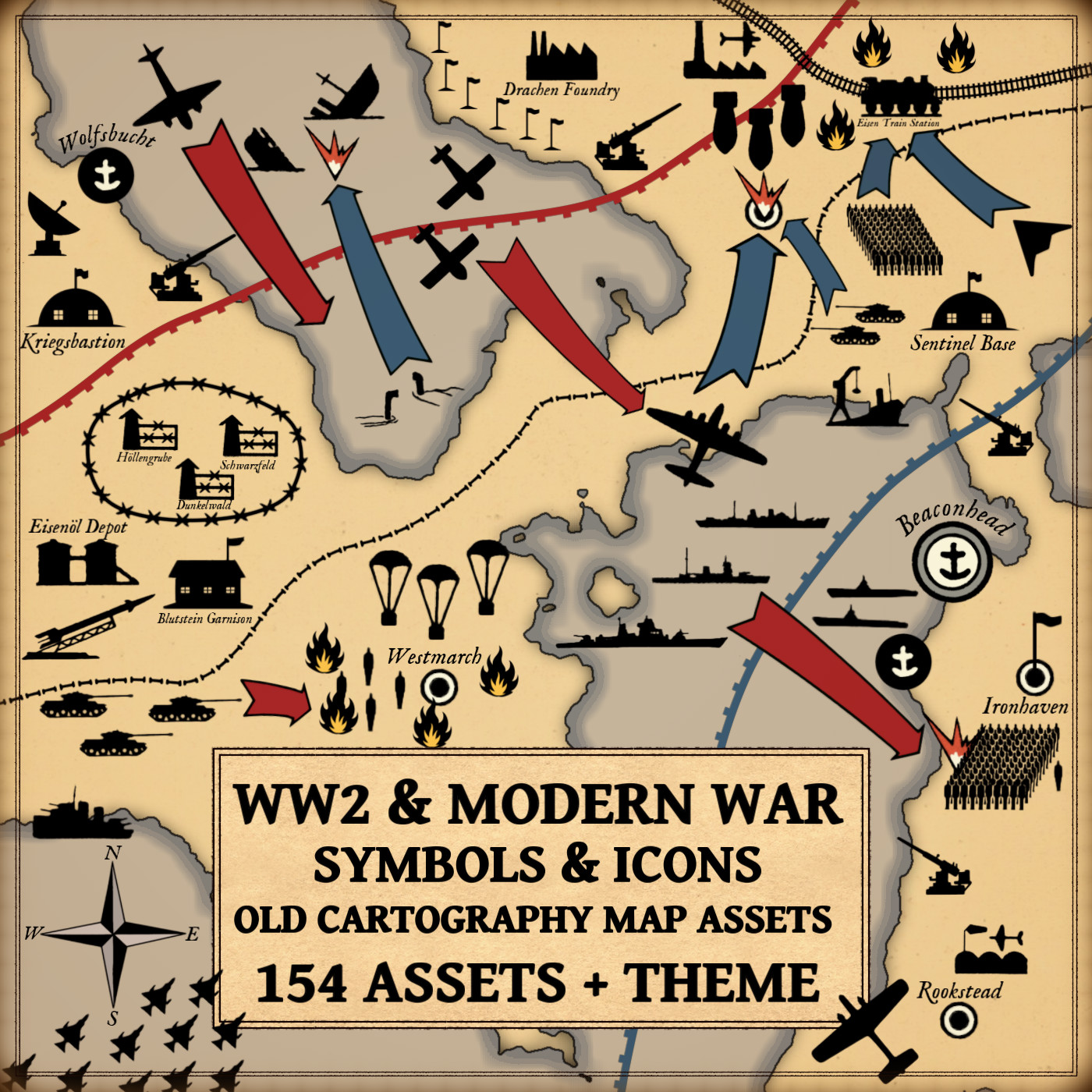
The WW2 & Modern War Symbols & Icons – Old Cartography Assets Megapack faithfully recreates these historical and strategic map symbols, offering a versatile set of military markers perfect for Wonderdraft assets users, wargamers, and fantasy worldbuilders.

But why are these symbols so effective, and what is their significance in both real-world strategy and fictional cartography?

This article explores the history, function, and artistic impact of military map symbols, tracing their evolution from WW2 battle plans to their influence on board games, wargaming, and fantasy cartography assets.

BUY AND DOWNLOAD The WW2 & Modern War Symbols & Icons – Old Cartography Assets Megapack here :


I. The Historical Role of Military Symbols in War Maps

1. The Birth of Military Cartography

The use of symbols in military maps dates back to antiquity. Generals such as Hannibal, Julius Caesar, and Sun Tzu relied on hand-drawn battlefield sketches to coordinate their forces. However, it was only in modern warfare that a standardized system of military icons was developed to improve strategic communication.

During World War II, the need for accurate, universally understood battle maps became crucial. Both Allied and Axis forces used cartography assets to illustrate:

  • Airfields, naval bases, and headquarters
  • Armored divisions, infantry battalions, and artillery positions
  • Supply depots, fortifications, and defensive lines
  • Naval fleets, aircraft carriers, and submarines

By reducing complex information into simple, recognizable symbols, military planners could quickly assess battle scenarios, strategize offensives, and organize defenses. These same principles are now used in Fantasy map icons for tabletop RPGs and wargaming.


2. Famous Examples of WW2 Strategic Maps

Some of the most influential WW2 military maps showcase how symbols and cartography assets were essential to strategic planning.

D-Day Invasion Maps (1944)

The Normandy landings required meticulous planning, with maps detailing:

  • Paratrooper drop zones
  • Naval bombardment targets
  • Tank and infantry movement routes

Eastern Front Operational Maps (1941-1945)

Used by German and Soviet forces, these maps depicted:

  • Frontline shifts and encirclements
  • Supply routes and logistics hubs
  • Defensive positions and fortifications

Pacific War Naval Strategy Maps

Both the U.S. Navy and the Imperial Japanese Navy used maps to track:

  • Aircraft carrier movements and battle group formations
  • Island invasions and amphibious landings
  • Submarine patrol zones and naval blockades

These real-world examples highlight why military symbols matter—they allow complex operations to be communicated clearly, a principle still applied in Fantasy map icons and Wonderdraft assets today.


II. Military Symbols in Wargaming and Fantasy Cartography

1. From WW2 Maps to Wargames and Strategy Games

The effectiveness of military symbols didn’t end with real-world wars. After WW2, wargaming and strategy games adopted WW2-inspired cartography assets to simulate battles, train officers, and entertain enthusiasts.

Examples of Wargames Using Military Symbols:

  • Axis & Allies (1981-present) – A strategic board game featuring armies, fleets, and aircraft represented by classic WW2-style icons.
  • Hearts of Iron (2002-present) – A grand strategy video game using WW2-style cartography assets to command divisions, naval units, and air squadrons.
  • Squad Leader (1977) – A tactical war board game that relies on WW2 military symbols for clarity in combat scenarios.

These symbols became universal in wargaming, shaping how players interact with battle maps.


2. The Role of Military Symbols in Fantasy and Fictional Maps

Even in fantasy worlds, war maps borrow from historical military cartography assets. Many fictional settings use Fantasy map icons similar to real-world war symbols to represent battles, invasions, and defenses.

Fictional War Maps Inspired by Military Cartography:

  • The War of the Ring (Lord of the Rings) – Maps of Middle-earth battles include army movements, siege locations, and fortifications reminiscent of WW2-style strategic maps.
  • Game of Thrones Battle Maps – These maps use movement arrows, fortress markers, and military banners, similar to historical war maps.
  • The Horus Heresy Campaign Maps (Warhammer 40k) – Galactic war maps in Warhammer 40K showcase fleet deployments, planetary invasions, and battlefronts, much like WW2 military maps.

This demonstrates how WW2-style symbols and cartography assets remain relevant—even in fantasy and futuristic settings.


III. The Utility and Aesthetic of War Map Symbols

1. Why Use Military Symbols in Maps?

The WW2 & Modern War Symbols & Icons Megapack offers more than just Wonderdraft assets for map creators—it serves both functional and aesthetic purposes in cartography. These symbols provide:

Tactical Clarity

  • Clearly define troop positions, air bases, and supply routes.
  • Show advancing and retreating forces with movement arrows.
  • Highlight key conflict zones and strategic fortifications.

Historical and Cultural Authenticity

  • Perfect for WW2 reenactments, historical RPG campaigns, and alternate history settings.
  • Adds a realistic war aesthetic to maps in fantasy, steampunk, or cyberpunk worlds.
  • Faithfully replicates old military cartography assets from WW2 and beyond.

Decorative and Immersive Value

  • Evokes the look of antique war maps, enhancing the vintage, old-cartography style.
  • Makes historical, tactical, and fantasy maps more engaging and visually striking.

Conclusion: The Lasting Impact of Military Cartography

Military symbols are not just about strategy—they are visual storytelling tools that bridge history, gaming, and fantasy. Whether used in WW2 operations, wargaming scenarios, or fantasy battle maps, these symbols simplify complex information while enhancing immersion.

The WW2 & Modern War Symbols & Icons Megapack captures this timeless cartographic tradition, making it an essential addition for Wonderdraft assets collectors, worldbuilders, and wargaming enthusiasts.

By using historically inspired war symbols, you’re not just designing a map—you’re creating a battlefield, a strategy, and a story.

Posted on

How World War 2 and 1 Cartography Assets Bring Maps to Life

Fantasy map assets, World War 2 propaganda poster, military infantry, WW1 WW2 resources, mapmaking

From ancient military sketches to modern fantasy maps, representations of military elements such as bunkers, trenches, tanks, camps, or aerial vehicles have always played a central role in crafting strategic and immersive narratives. These elements, both functional and symbolic, enrich maps by adding visual and narrative depth, whether to depict real battles or imagine fictional conflicts.

The Alternate WW1 & WW2 – Vintage Assets Megapack embraces this tradition. With over 545 assets, it brings together everything needed to create complex, realistic maps—whether to recreate historical battlefields or dive into alternate, steampunk-inspired worlds. These assets, including bunkers, tanks, fortifications, trenches, military bases, aerial vehicles, and more, draw direct inspiration from historical conventions and artistic styles of old maps.

BUY AND DOWNLOAD The Alternate World War 1 & 2 – Vintage assets Megapack here :


A Tradition Rooted in Military History

Military maps have always been more than just logistical tools; they are cultural artifacts and visual testimonies of conflict. Over centuries, these maps evolved to reflect technological advancements and the strategic needs of armies. Representations of fortifications, artillery placements, or troop positions were not only essential for military planning but also for documenting and immortalizing battles.

The maps of the First and Second World Wars marked a significant milestone in this tradition. Trench networks in the Battle of the Somme, the bunkers of the Maginot Line, or the massive cannons used during the Siege of Sevastopol were meticulously represented to guide generals and soldiers. These maps included elements such as modular trenches, bomb impacts, and tank positions, which are also featured in this asset pack.

What makes these elements so fascinating is their dual purpose. On the one hand, they provided crucial information on the disposition of forces and tactics used; on the other, they told a story. Bomb craters, rising smoke, ruined towns—all of these transformed a map into a vivid scene, a moment frozen in the chaos of war.


Immersion and Storytelling Through the Vintage WW1 & WW2 Pack

The Alternate WW1 & WW2 – Vintage Assets Megapack captures this military heritage and adapts it for the needs of modern creators. Each asset in the pack has been designed to seamlessly fit into fantasy, historical, or role-playing maps, blending historical accuracy with endless creative possibilities.

With this pack, creators can draw complex battle scenarios or post-apocalyptic landscapes, add massive defensive structures, or stage intimate skirmishes between soldiers. Here’s how these assets provide a unique sense of immersion:

Solid and Strategic Fortifications

Bunkers, trenches, and barbed wire are at the heart of any realistic war map. Inspired by the detailed plans of 20th-century wars, these assets allow you to recreate elaborate defensive lines. Whether building an impregnable stronghold or simulating a labyrinthine trench network, these elements ground your maps in credible, strategic narratives.

The Machinery of War

Tanks, armored vehicles, and giant cannons were central to modern warfare. This pack includes not only realistic representations of these machines but also massive mobile platforms and alternate-history cannons, perfect for steampunk or speculative worlds.

Aerial and Naval Dimensions

Biplanes, zeppelins, and military ships bring a new layer of depth to maps. These assets evoke both the aerial and maritime battles of the two world wars and provide opportunities for unique scenarios, such as airborne invasions or strategic bombings.

Life and Death on the Battlefield

Bomb craters, smoke, and ruined buildings add a dramatic dimension to your maps. These elements tell the stories of past battles, turning a simple map into a richly emotional scene. With these assets, you can depict a besieged city, a devastated frontline, or an abandoned battlefield.

Detailed Camps and Military Bases

Military camps, hangars, command posts, and communication towers bring strategic hubs and secured zones to life. Whether representing an advanced base or a well-established headquarters, these structures enrich your maps with detail and purpose.

Exceptional Flexibility and Modularity

With modular elements like security fences, trenches, and roads, the possibilities for customization are endless. You can create unique configurations tailored to your narrative and strategic needs.


A Blend of Realism and Creativity

This pack is not limited to historical recreations. It is equally suited for alternate-history or fantastical maps where creativity takes precedence over reality. Imagine a steampunk army defending a city against a mechanical titan, or zeppelins transporting giant cannons over war-ravaged lands. The possibilities are infinite.

The assets in the pack are equally at home in role-playing universes like Dungeons & Dragons, strategy games, or artistic projects. They serve as a solid foundation for serious scenarios and a fertile ground for experimenting with bold ideas.


Why This Pack is Essential

The Alternate WW1 & WW2 – Vintage Assets Megapack is more than just a collection of visual resources—it is a tool for storytelling, worldbuilding, and honoring a timeless tradition of military cartography. Every bunker, tank, trench, and vehicle tells a story. Every crater and ruined building carries the weight of imagined or real battles.

Whether you are a passionate historian, a fantasy map creator, or a fan of alternate worlds, this pack offers everything you need to design immersive, strategic, and visually stunning maps.

So, prepare your pens, digital tools, or dice, and dive into this rich collection to bring your most ambitious ideas to life. With the Alternate WW1 & WW2 – Vintage Assets Megapack, war—whether historical or fictional—comes alive in a new and fascinating way.

Posted on

How the Horror Fleshscape Redefines Fantasy Map Assets

Fleshscape map assets, cartography assets, RPG, Wonderdraft map assets, symbols

The art of map-making has always been more than a mere tool for navigation. From the fantastical beasts of medieval cartography to the allegorical representations of land and sea, maps have long reflected the cultural psyche of their times. With the advent of the Horror Fleshscape Complete Megapack, this tradition is transformed into something uniquely visceral—a nightmarish blend of terrain and body horror that reshapes how we imagine fantasy worlds. In this article, we explore the historical, cultural, and artistic roots of such a concept, tracing its lineage through antique maps, the aesthetics of body horror, and its place in the evolving world of fantasy cartography.

BUY AND DOWNLOAD The Horror Fleshscape Complete Megapack – Vintage Assets Pack here :


Antique Cartography: Maps as Cultural Artifacts

Antique maps, particularly those from the medieval and Renaissance periods, were as much works of art as they were practical tools. They were often decorated with fantastical creatures, allegorical figures, and ornate designs that revealed the worldview of their creators. Maps like the Hereford Mappa Mundi (circa 1300) and the Ebstorf Map (13th century) illustrate how medieval cartographers interpreted the world through a lens of religion, mythology, and fear of the unknown.

For example, the Hereford Mappa Mundi situates Jerusalem at its center and populates the margins with monstrous races—headless men, dog-headed creatures, and dragons—symbolizing the dangers and mysteries of uncharted territories. Similarly, the Ebstorf Map famously overlays the known world with the body of Christ, illustrating a theological interpretation of geography. Such maps were not about accuracy; they were about expressing ideas, beliefs, and anxieties.

These traditions align with the Horror Fleshscape Complete Megapack, which similarly prioritizes atmosphere and narrative over strict realism. The assets within the pack—flesh mountains, bone caves, tumor-infested cities—draw from this historical tradition, transforming maps into storytelling devices that evoke dread and fascination.


The Role of Grotesque Symbolism in Antique and Fantasy Maps

The grotesque has always held a special place in visual art. In cartography, grotesque symbols often marked areas of danger or the unknown, serving both a decorative and didactic function. For example, Renaissance-era maps often featured “Here Be Dragons” notations alongside illustrations of sea monsters. These grotesque elements were symbolic warnings of perilous waters, the boundaries of the known world, and humanity’s fear of the void.

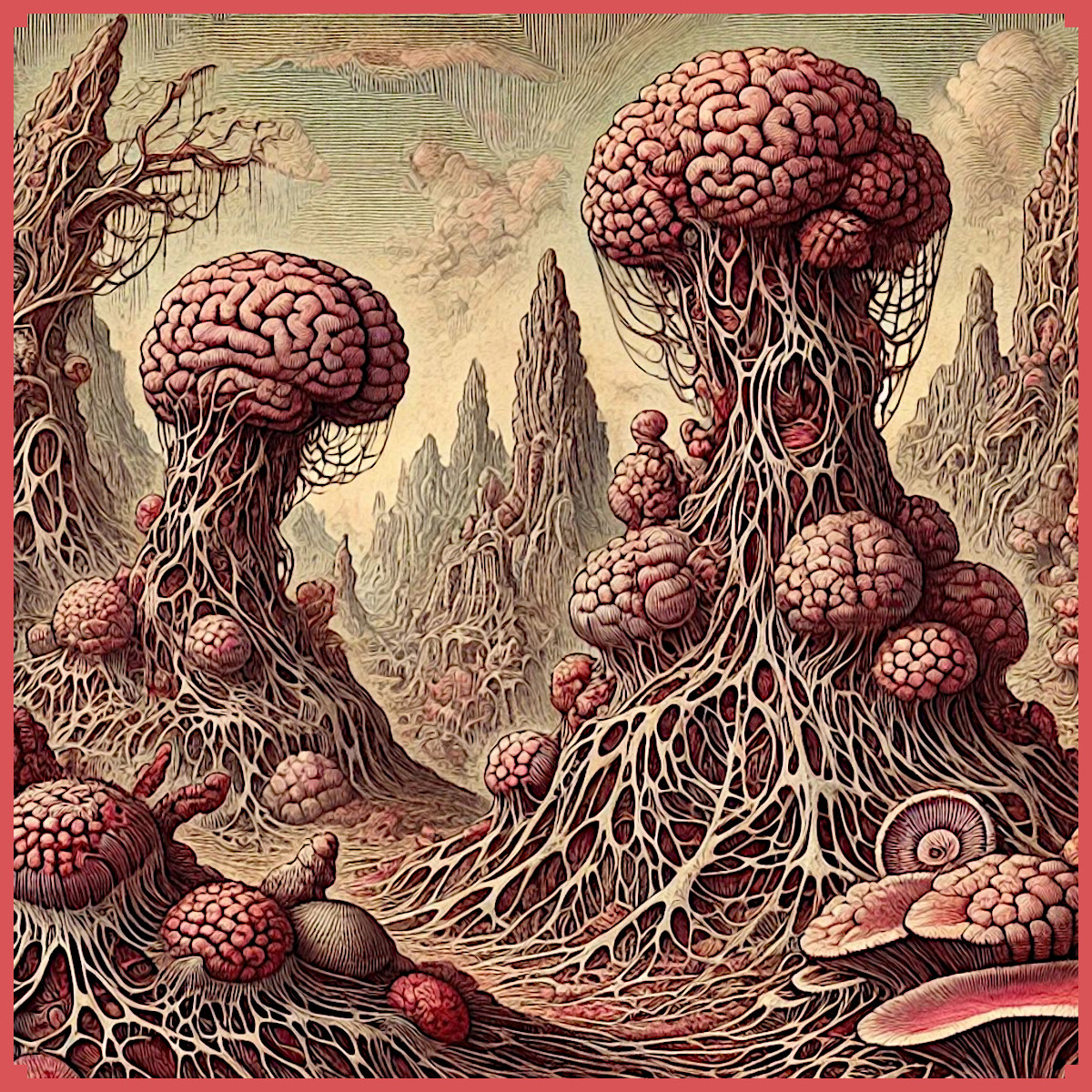
The Horror Fleshscape Complete Megapack reimagines these grotesque traditions in a deeply unsettling way. Instead of sea monsters and mythical beasts, it populates the map with organic horrors like veiny caves, brain mounds, and flesh plains. These elements create an otherworldly geography that feels alive, pulsating with an eerie vitality. Just as antique maps reflected the fears and superstitions of their time, the Fleshscape reflects a modern fascination with decay, mutation, and the uncanny.


Body Horror: From Ancient Myths to Modern Fantasies

To understand the appeal and impact of the Fleshscape, we must delve into the genre of body horror, a form of storytelling that explores the grotesque transformation of the human body. This genre is rooted in ancient myths but has been profoundly shaped by modern artists, filmmakers, and writers.

Mythological Roots

The earliest examples of body horror can be found in myths and folklore. From the Gorgon Medusa’s petrifying gaze to the monstrous transformations of werewolves, ancient stories often used physical distortion to symbolize moral or spiritual corruption. These tales were both cautionary and cathartic, allowing audiences to confront their fears of disease, death, and the unknown.

Modern Evolution

The modern era has seen the rise of body horror as a distinct genre, pioneered by artists like David Cronenberg and Junji Ito. Cronenberg’s films (The Fly, Videodrome) explore the intersection of technology, flesh, and identity, often depicting bodies that mutate beyond recognition. Junji Ito’s works (Uzumaki, The Enigma of Amigara Fault) take a more psychological approach, using surreal and grotesque imagery to evoke existential dread.

The Horror Fleshscape Complete Megapack draws heavily from these influences. Its landscapes are a macabre symphony of flesh and bone, evoking the visceral unease of Cronenberg’s transformations and the haunting surrealism of Ito’s worlds. Features like flesh cultist temples and tentacle-ridden towns could easily belong to one of their creations, reinforcing the pack’s ties to the body horror tradition.


Fleshscapes in Fantasy Maps: Aesthetic and Narrative Potential

The Fleshscape is not just a visual innovation; it’s a narrative tool that opens up new possibilities for storytelling in tabletop role-playing games (TTRPGs), fantasy novels, and video games. Its grotesque features can serve as metaphors for decay, corruption, and the fragility of the human condition.

A World That Feels Alive

In traditional fantasy maps, landmarks like mountains, rivers, and forests are static. The Fleshscape, by contrast, suggests a world that is alive and constantly transforming. Features like ground maws and colossal worms imply a geography that can shift and consume, challenging players to adapt to an ever-changing landscape.

Themes of Corruption and Transformation

Fleshscapes are particularly suited to dark fantasy and horror settings, where themes of corruption and transformation are central. A tumor-infested city, for instance, could symbolize the moral decay of its inhabitants, while a flesh knight or flesh mage might represent the dangers of tampering with forbidden powers.

Immersive Storytelling

By incorporating elements like eyeballs in flesh nests and giant rib bones, game masters can create immersive worlds that feel alien yet oddly familiar. These grotesque features provoke visceral reactions in players, heightening the emotional impact of the story.


Cultural Reflections: Why We Are Drawn to the Grotesque

The popularity of body horror and grotesque aesthetics reflects a broader cultural fascination with the fragility and malleability of the human form. In an era defined by rapid technological and medical advancements, the boundaries between human and non-human, organic and synthetic, are increasingly blurred. The Fleshscape taps into these anxieties, offering a grim exploration of what it means to be alive in a world of constant change.


Inspiration and Legacy: From Blame! to Fleshscape RPG

The Fleshscape owes much of its inspiration to groundbreaking works in speculative fiction and tabletop gaming. Tsutomu Nihei’s Blame!, with its sprawling biomechanical landscapes, offers a vision of a world that is both awe-inspiring and deeply unsettling. Similarly, the Fleshscape RPG explores themes of survival in an organic, ever-changing world, providing a perfect thematic parallel to the map assets in the pack.


Conclusion: A New Frontier in Fantasy Cartography

The Horror Fleshscape Complete Megapack is more than a collection of assets; it’s a gateway to new realms of storytelling and artistic expression. By merging the traditions of antique maps with the visceral aesthetics of body horror, it creates maps that are as thought-provoking as they are unsettling. Whether you’re a game master designing a dark fantasy campaign or an artist seeking to push the boundaries of cartographic art, the Fleshscape offers a wealth of possibilities.

Ultimately, the Fleshscape is a testament to the enduring power of maps to capture not just the physical world, but the fears, dreams, and obsessions of those who create them. It reminds us that, just as the Hereford Mappa Mundi once charted a medieval worldview, modern maps can chart the landscapes of our darkest imaginations.