Posted on

Mapping Medieval Fantasy Industries: The Power of Cartography Assets

wonderdraft assets, medieval fantasy smokestack industries, medieval factories, vintage fantasy map assets

Maps have always served as more than just navigational tools; they are windows into the cultures, economies, and historical periods they depict. In both fantasy and historical settings, maps do more than simply chart landscapes—they bring to life the industrial pulse of a civilization, showcasing the economic heartbeats that keep nations thriving. This article explores the representation of medieval factories, industrial towns, mining hubs, and smokestacks in both historical cartography and fantasy worldbuilding. Additionally, we will delve into the assets available in the Medieval Fantasy Industries & Factories – Vintage Assets Megapack, offering insights into how they can be used to enhance modern fantasy maps.

BUY AND DOWNLOAD The Medieval Fantasy Industries & Factories – Vintage Assets Megapack here :

The Evolution of Industry in Antique Maps

From the earliest Renaissance maps to later Victorian representations, industries and factories were often highlighted as symbols of power and prosperity. In historical maps, cities were adorned with illustrations of ports, warehouses, and factories, reflecting their significance in the economic landscape. For example, Renaissance-era maps of cities like Florence and Venice would frequently include symbols of production centers, denoting the cities’ industrial and economic importance.

In fantasy settings, similar representations are essential in grounding the world with a sense of realism. While not every map in fantasy works features factories or industries, the presence of smokestacks and industrial centers conveys a world in motion—whether powered by magic or steam. These elements offer visual clues that the fantasy world is one of progress, with bustling economies and technological advancements shaping its future.

The Role of Medieval Factories, Industries, and Smokestacks in Fantasy Maps

In the realm of fantasy map-making, the inclusion of factories, industrial towns, and smokestacks brings a new layer of depth and realism to the world being created. These assets, while often subtle, provide valuable information about the economic foundations of a kingdom or city. The presence of smokestacks in particular symbolizes the energy and resources required to power a world steeped in production, from simple smithing to more elaborate magical industries.

Smokestacks: A Symbol of Industry and Power

One of the most striking elements in these fantasy maps is the smokestack, which has become a universal symbol of industry and progress. Historically, smokestacks were associated with the industrial revolution and the rise of manufacturing hubs, representing both economic power and the environmental cost of industrialization. On fantasy maps, these towering structures serve a dual role—both decorative and symbolic. Smokestacks indicate key production areas where materials are processed or enchanted items are forged, underscoring a city’s technological advancement or magical prowess.

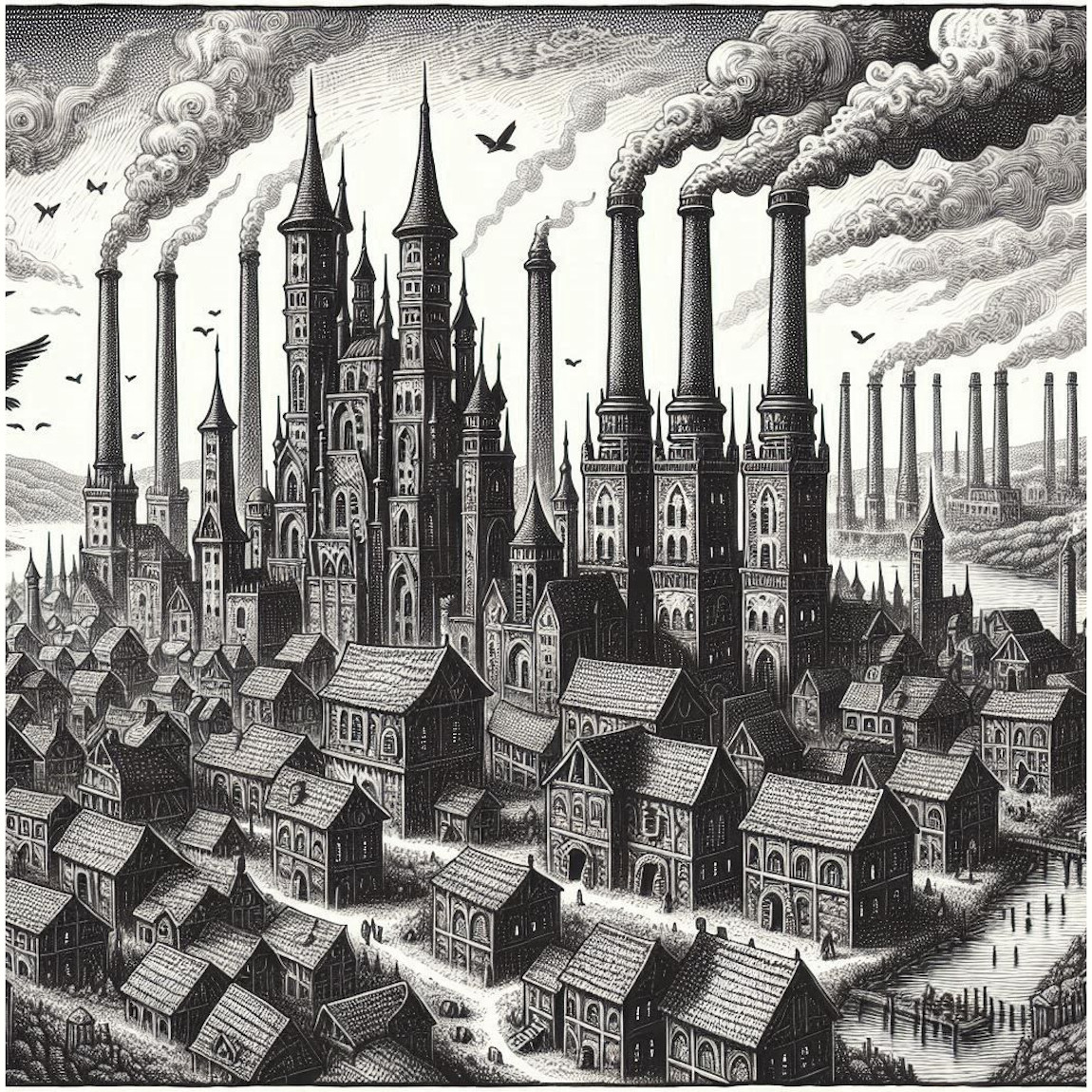
In fantasy maps, the depiction of smokestacks emerging from sprawling factory complexes or forge towns gives a clear indication of the bustling activity within. The contrast between small villages with just a few smokestacks and large industrial cities where the skyline is filled with these towering pillars helps establish the scale of industrialization in each location. This subtle visual cue tells the viewer about the importance of trade and production to the economy of the area.

Key Assets in the Medieval Fantasy Industries & Factories Megapack

The Medieval Fantasy Industries & Factories Megapack offers a rich collection of assets that bring medieval and fantasy industrialization to life. Below are descriptions of key asset categories and how they can be used to enhance fantasy maps.

1. Factories and Forge Complexes

Factories and forge complexes are depicted with a strong visual emphasis on their towering smokestacks. These complexes, consisting of interconnected brick buildings and tall chimneys emitting plumes of smoke, represent large-scale industrial hubs. The detailed representation of multiple smokestacks signals high levels of production—whether in metal forging, magical item crafting, or large-scale weapon manufacturing.

These assets can be used to show critical industrial locations on a map, anchoring the idea of cities driven by production. The smoky plumes add a dynamic quality to the map, suggesting ongoing processes within these factories, creating a sense of life and motion in the fantasy world.

2. Industrial Cities and Towns

The large industrial cities are vast, complex networks of factories and densely packed worker housing, with smokestacks rising over the rooftops. These cities are vital to the economy of the world, representing major hubs where goods are produced, distributed, and traded. The visual density of these cities suggests not only production but also population centers dependent on the industries that sustain them.

On a fantasy map, these industrial cities can be used to mark major economic centers, helping to define trade routes or areas of political importance. The heavy presence of smokestacks emphasizes the scale of production taking place in these cities, serving as a symbol of progress and innovation.

3. Mining Towns

The mining towns featured are smaller but no less vital to the economy of the fantasy world. These towns are characterized by modest industrial structures and smokestacks that mark areas of resource extraction, such as ore refining or mineral processing. In a world-building context, mining towns provide essential raw materials for the larger cities and industrial centers, playing a critical role in the supply chain.

The inclusion of these towns on a map can highlight regions rich in natural resources. The smokestacks symbolize not only the extraction of these materials but also the pollution and environmental impact that often comes with mining operations.

4. Alchemy Workshops and Breweries

Alchemy workshops and breweries are smaller in scale compared to the massive factory complexes but still play an essential role in fantasy worlds. These workshops, often marked by a single smokestack or small cluster of chimneys, represent centers of potion-making, distillation, or magical experimentation.

On a map, these workshops can serve as important narrative points where characters can interact with the magical economy, providing context for potion-based trades or magical brews that fuel a kingdom’s power. The presence of smokestacks here indicates the complex processes occurring within, whether magical or mundane.

5. War Forges and Blacksmith Industries

War forges and blacksmith industries are marked by multiple smokestacks and expansive industrial buildings. These assets represent the mass production of weapons, armor, and other wartime necessities. Their imposing size and numerous smokestacks make them symbols of military might and industrial efficiency.

On fantasy maps, these forges can be placed near battlefronts or military encampments, symbolizing areas of production dedicated to the war effort. The sight of these forges can evoke feelings of power, preparation, and the inevitable cost of conflict.

6. Individual Smokestacks

The individual smokestacks included in the pack, offer versatility for mapmakers. These modular components allow for the customization of industrial sites, adding more smokestacks to signify increased production or pollution. By adding extra smokestacks to existing buildings, cartographers can emphasize the scale and intensity of industrialization.

These smokestacks are a powerful visual tool for storytelling, showing how a once-simple workshop or factory can evolve into a sprawling, polluted industrial complex. The transformation illustrated in the images highlights the flexibility of these assets.


The Cultural and Symbolic Role of Smokestacks and Industry in Maps

Beyond their functional purpose, smokestacks and other industrial symbols hold cultural and narrative significance. Historically, smokestacks symbolized progress, but they also represented the environmental and social costs of industrialization. In a fantasy world, smokestacks may similarly represent the balance between growth and destruction—both economic progress and the potential degradation of the environment or exploitation of workers.

In maps, the presence of these elements serves to deepen the complexity of the world being depicted. By showcasing industrial centers with dense clusters of smokestacks, cartographers can communicate the centrality of industry and production to the economy, but also hint at the conflicts or challenges that come with such rapid expansion.


Conclusion

The Medieval Fantasy Industries & Factories – Vintage Assets Megapack is a versatile and richly detailed collection that allows mapmakers to create immersive, living worlds. From sprawling industrial cities with towering smokestacks to smaller mining towns and magical workshops, these assets provide a visual language that speaks to the economic and industrial heart of a fantasy realm.

By incorporating these elements into your maps, you can convey a sense of progress and production, as well as the costs associated with industrialization. Whether used to build major trade hubs, military forge towns, or mystical alchemical workshops, these assets will bring your fantasy world to life with a sense of vibrancy, history, and purpose. Smokestacks, in particular, offer a powerful symbol of industry, driving home the narrative of a world in motion, teetering on the edge of progress and transformation.

Posted on

Exploring Cartography Assets – The Legacy of Jungle Tree Clumps in Mapmaking

Wonderdraft tree clumps, vintage cartography assets, trees fantasy map resources, jungle trees, fantasy map symbols

Maps have long been essential tools for navigation, exploration, and storytelling. Over centuries, cartography has evolved from simple diagrams of local areas to elaborate artistic representations of distant lands, infused with myth, legend, and cultural significance. Among the fascinating elements of both antique and fantasy maps are the depictions of landscapes, particularly jungles and forests, with the use of jungle tree clumps, palm trees, and individual jungle trees—a feature well-represented in the Old Cartography Jungle Tree Clumps – Assets Megapack.

BUY AND DOWNLOAD The Old Cartography Jungle Tree Clumps – Assets Megapack here :

Historical Significance of Vegetation in Antique Maps

The depiction of forests and jungles in antique maps was not just a reflection of geographic knowledge, but also an artistic choice steeped in symbolism and utility. Ancient and medieval cartographers often used tree clumps to represent large, forested areas. Unlike modern maps that rely on precise scale and detailed land surveys, early maps employed symbols that conveyed the nature of the terrain more generally. These clusters of trees were crucial in indicating regions of dense vegetation—places that could signify both riches and danger.

Take, for example, Fra Mauro’s Map (1459), one of the most renowned medieval maps. It showcased Africa’s vast forests through clusters of trees, suggesting lush, untamed regions teeming with exotic flora and fauna. Palm trees frequently represented tropical or arid zones, marking areas rich in resources such as dates, coconuts, and medicinal plants. Similarly, in the Tabula Rogeriana by al-Idrisi (1154), palm trees were used to depict specific trade routes and oases across the Middle East and North Africa. These representations were not meant to be literal; instead, they conveyed both geographic and economic information—palm trees indicated fertile and valuable regions along the desert.

In the Renaissance era, maps like Abraham Ortelius’s “Theatrum Orbis Terrarum” (1570) continued this tradition, using tree clumps to illustrate dense forests such as the Amazon or the African Congo. These areas, often depicted as mysterious and remote, stirred the imagination of explorers and armchair travelers alike.

Cultural and Symbolic Meanings

Beyond their practical utility, trees held deep cultural meanings. Palm trees, for instance, symbolized peace, victory, and fertility across many civilizations. The Roman Empire used palm branches as symbols of triumph. In cartography, this symbolism was subtly retained, with palm trees often marking paradisiacal regions, evoking thoughts of luxury and exoticism.

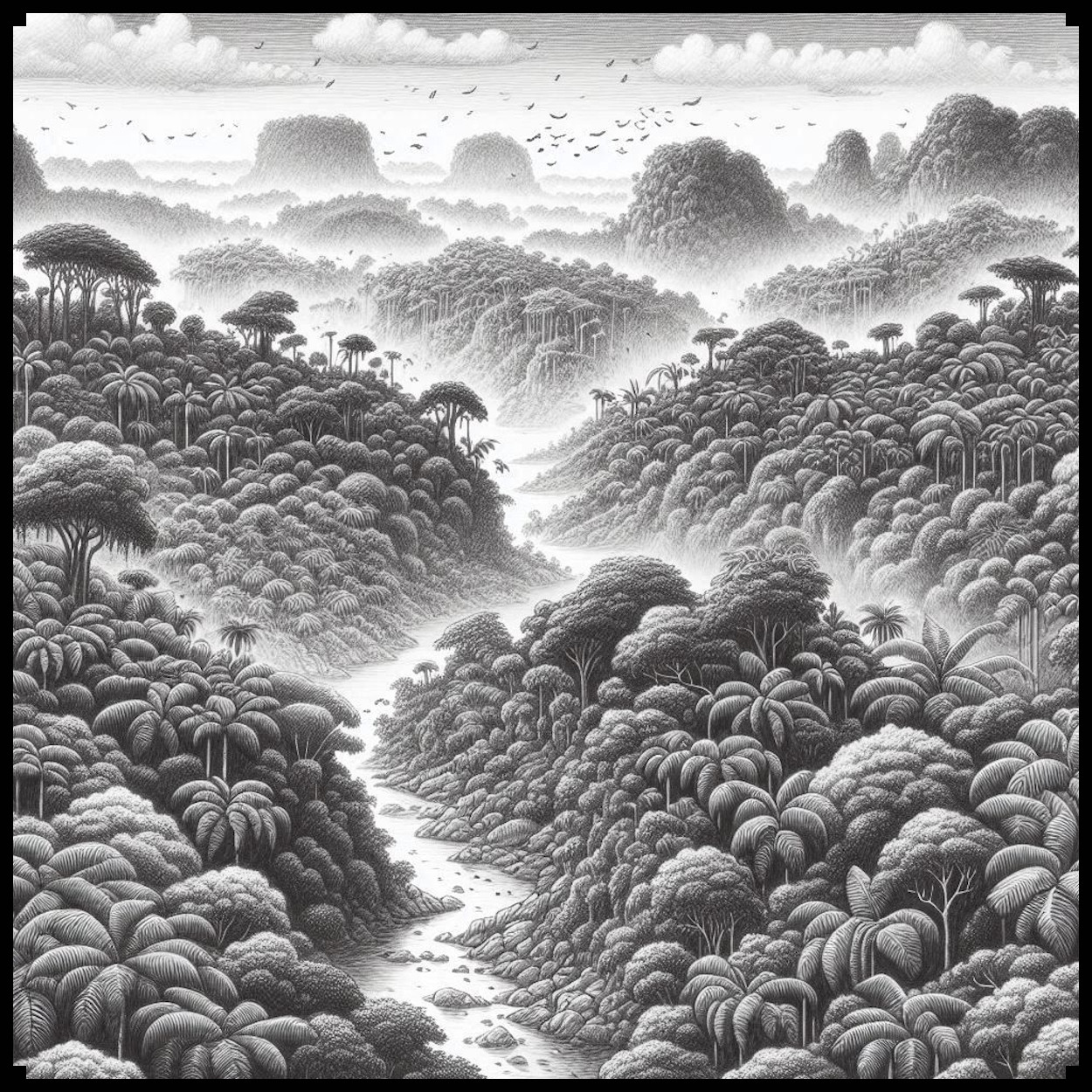
The clustering of jungle trees into tree clumps—as opposed to drawing individual trees—was not only a practical way to represent large expanses of wilderness, but also reflected an artistic approach that sought to balance aesthetics and information. Clusters of trees provided a harmonious and cohesive representation of untamed nature. They mirrored the way people of ancient times viewed these regions: as vast, interconnected ecosystems rather than areas of isolated trees.

In the Old Cartography Jungle Tree Clumps – Assets Megapack, this tradition is masterfully continued. By grouping trees together into natural clumps, the design evokes the feel of hand-drawn, ancient maps. It mirrors the technique of antique cartographers, where individual jungle trees or palms would have felt disjointed. Tree clumps give the impression of wilderness spreading out organically, much like the forests on Ptolemy’s World Map (2nd century CE), where vast jungles in the Indian subcontinent and Africa were depicted as contiguous, impenetrable regions.

The Role of Jungle Trees and Palm Trees in Fantasy Maps

Fantasy maps, particularly in world-building for books, films, and games, draw heavily on the visual language of antique cartography. For example, in J.R.R. Tolkien’s Middle-earth maps, forests like Mirkwood are rendered as clusters of trees, lending a sense of scale and depth to these fantastical regions. Similarly, in George R.R. Martin’s world of Westeros (A Song of Ice and Fire), dense forests like the Wolfswood are depicted through clumps of trees, reinforcing the idea of these areas as vast and ancient.

In fantasy, palm trees and jungle trees frequently symbolize uncharted or exotic lands. From the rainforests of Chult in Dungeons & Dragons to the deserts of Azeroth in World of Warcraft, the use of grouped vegetation—especially tree clumps—communicates the idea of danger and mystery. Jungles are often places where heroes encounter the unknown, reinforcing a sense of adventure.

The Old Cartography Jungle Tree Clumps – Assets Megapack perfectly captures this essence by offering not just individual jungle trees or palms, but entire clusters, allowing fantasy map creators to maintain a consistent, handcrafted feel. These assets can help bring a sense of coherence and unity to the landscape, making the world feel more lived-in and immersive.

Aesthetic and Functional Aspects of Tree Clumps

One of the reasons jungle tree clumps are so effective in maps—both antique and fantasy—is their visual coherence. When trees are drawn individually, especially in large numbers, they can create a disjointed, chaotic look. Grouping them into clumps creates harmony, balancing the dense complexity of forests with the readability of the map.

In addition to aesthetic value, jungle tree clumps serve a utilitarian purpose. By clustering trees, mapmakers can convey a region’s topography more succinctly. Whether indicating dense, impenetrable jungles, or showing navigable spaces between tree clusters, these groupings provide crucial information to the viewer without overwhelming them with detail. For example, in the Hereford Mappa Mundi (circa 1300), forests are often shown as interconnected clumps of trees, making it easy for the viewer to distinguish between wilderness and settled areas.

The Old Cartography Jungle Tree Clumps – Assets Megapack taps into this rich tradition by providing assets that allow for the easy representation of jungles and tropical regions in a way that is both visually appealing and historically informed. The inclusion of individual palm trees, jungle trees, and tree clumps ensures versatility, while the grouped clumps maintain the overall cohesion and handmade feel that antique maps are known for.

Why Tree Clumps Have Stood the Test of Time

The use of tree clumps in cartography has endured for centuries, from ancient maps to modern fantasy creations, because they strike a balance between artistry and functionality. In the real world, forests are not isolated patches of individual trees, but interconnected ecosystems, and tree clumps on maps reflect this reality. They allow cartographers to represent vast areas efficiently, while also imbuing the map with a sense of the organic spread of nature.

Moreover, tree clumps are emblematic of the handmade quality that modern digital maps often lack. Antique maps, with their imperfections and artistic flourishes, convey a sense of human craftsmanship. In an era where many digital maps can feel sterile or overly precise, assets like those found in the Old Cartography Jungle Tree Clumps – Assets Megapack bring back that feeling of a mapmaker’s personal touch.

For map designers in fantasy and historical genres, using jungle tree clumps creates not only a sense of scale but also of authenticity. Whether it’s for a tabletop role-playing game, a fantasy novel, or a video game, these assets evoke the grand tradition of old-world cartography. They remind us of the mystery, adventure, and exploration that jungles and forests represented to ancient peoples—and continue to represent in modern fantasy worlds.

Conclusion

The Old Cartography Jungle Tree Clumps – Assets Megapack stands as a tribute to the rich history of cartographic art, merging the functional aspects of representing jungles, palm trees, and forests with the aesthetic traditions of ancient maps. By using these assets, mapmakers can evoke the feeling of antique hand-drawn maps, where tree clumps were more than mere symbols—they were part of the storytelling process, representing the wild, untamed lands that lay beyond the edges of the known world.

Whether for fantasy or historical maps, the use of jungle tree clumps is not only practical but also a beautiful nod to the cultural and artistic legacy of cartography.

Posted on

Modern Cityscapes in Fantasy Map Symbols: A New Era of Cartography

Wonderdraft modern assets, vintage modern cartography assets, modern fantasy map resources

Maps have been fundamental to human civilization, serving as tools for navigation, representation, and cultural expression for centuries. From the intricate medieval mappa mundi to the sweeping landscapes of Renaissance-era cartography, maps have long been a blend of artistry and utility. As fantasy maps continue to gain popularity, especially in world-building for fiction, tabletop RPGs, and games, they have evolved to incorporate not only traditional symbols and motifs but also modern-day elements, such as skyscrapers, airports, and industrial zones. The Modern Era Complete Megapack – 1161 Vintage Assets exemplifies this unique fusion of the ancient and the contemporary, bringing modern infrastructure into the aesthetic of antique-style maps. But why do modern cities, farmlands, and ports hold such significance in these fantasy and antique map styles? Let’s explore the role, history, and utility of modern representations within these maps.

BUY AND DOWNLOAD The Modern Era Complete Megapack – 1161 Vintage assets here :

The Role of Cities and Modern Urban Spaces in Maps

Historically, maps were utilitarian objects. They guided travelers across oceans, through deserts, and over mountains. Yet, they were also deeply cultural artifacts, often adorned with elaborate illustrations and symbols representing both real and imagined places. Take, for instance, the Hereford Mappa Mundi (circa 1300), which combines religious symbolism, mythical creatures, and known geographic locations, all under a worldview dominated by Christian theology. The map was not just a guide but a representation of the spiritual and political landscape.

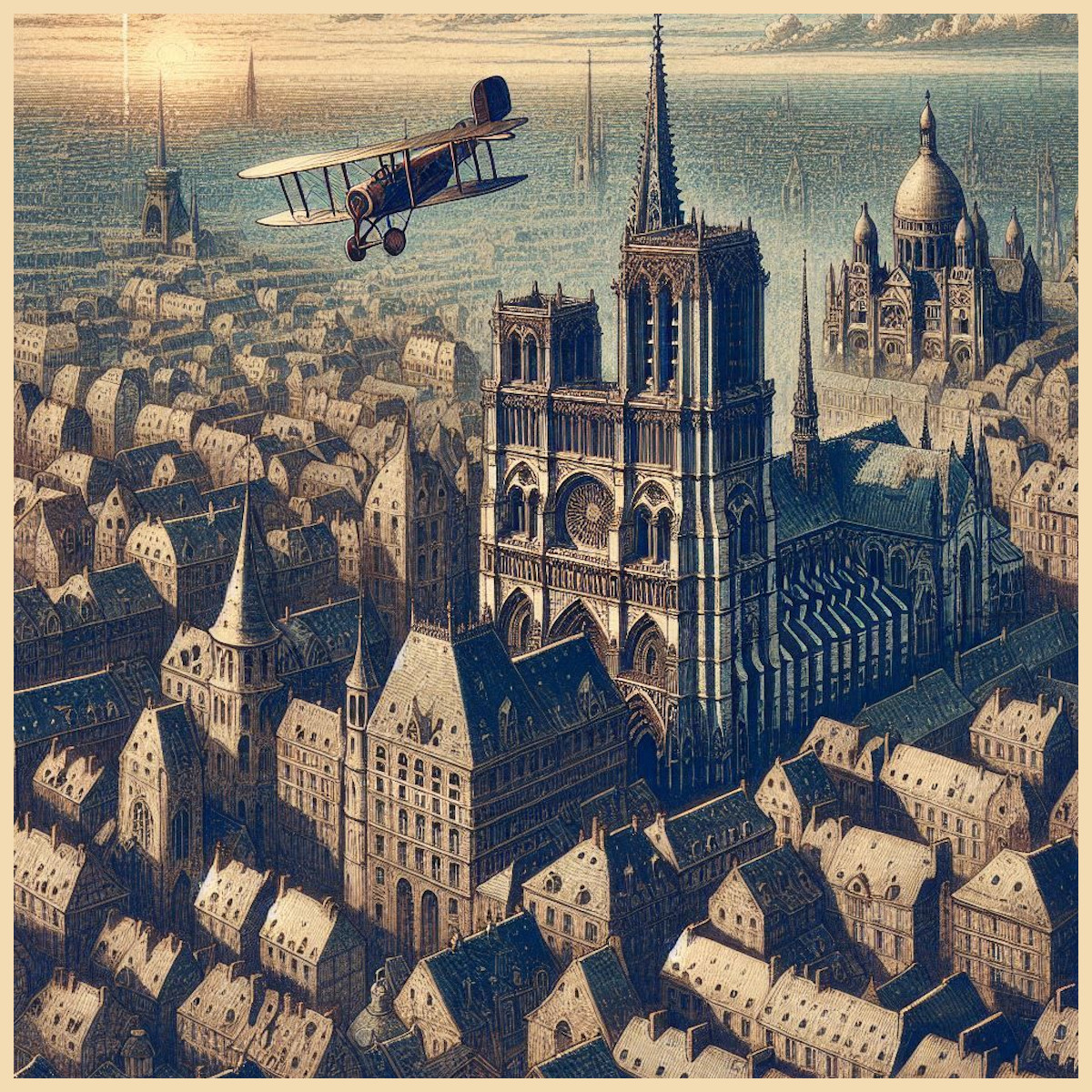
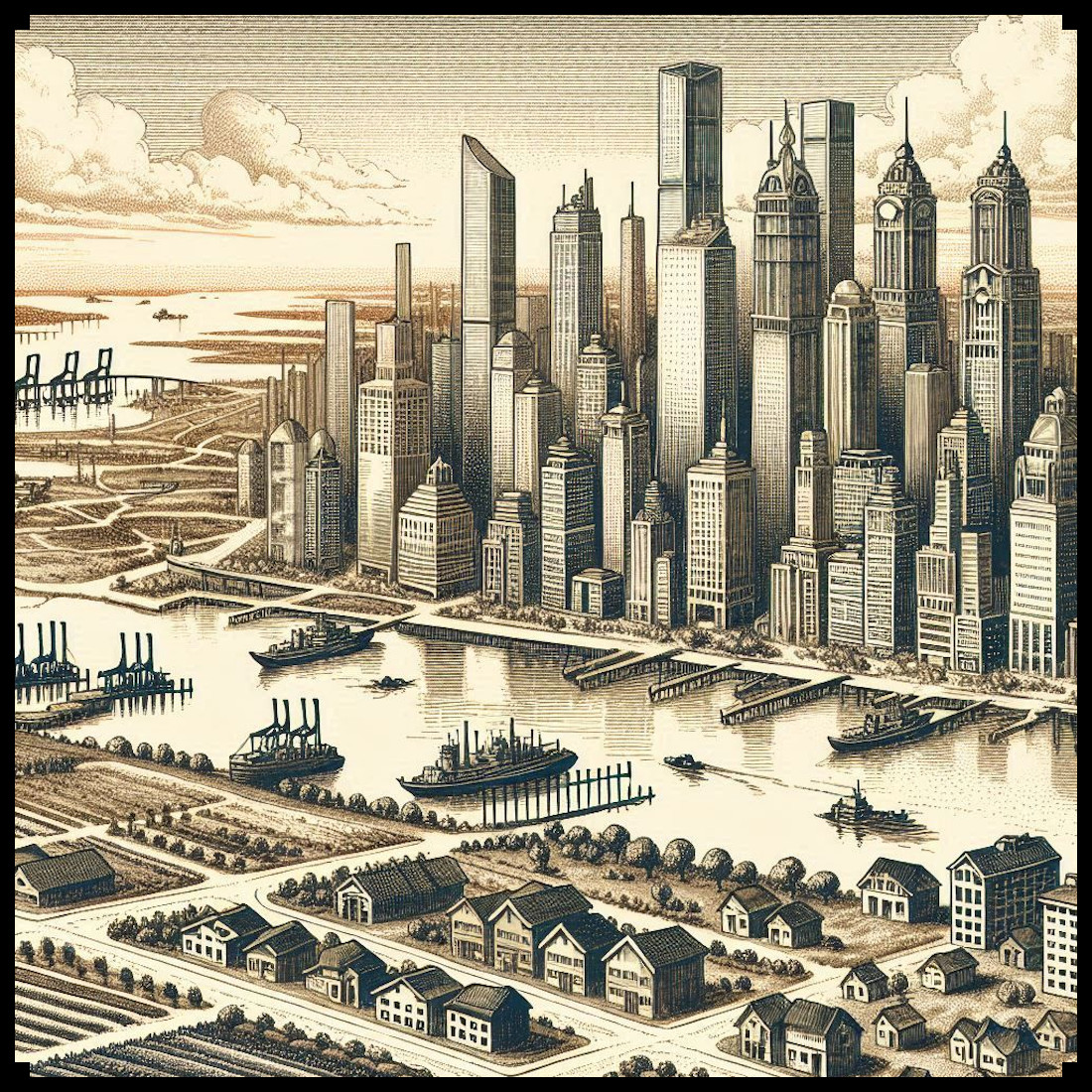
In a similar vein, contemporary fantasy maps are not merely about geography—they are narratives. The inclusion of modern elements like skyscrapers, industrial zones, and farmlands in these maps adds layers of meaning and utility. These assets, from the Modern Era Complete Megapack, enable creators to imagine sprawling metropolises next to medieval castles or blend futuristic settings into rustic villages. A skyscraper, for example, might signify not just the presence of a modern city but also symbolize power, economic dominance, or a new world order—just as towers and fortresses did in ancient maps.

Similarly, ports with cargo ships, cruise ships, and marinas offer more than just maritime detail. They signify trade, travel, and global connectivity. A map incorporating these modern elements becomes a living, breathing world where characters can move goods, engage in trade wars, or simply observe the transition from an old-world economy to a globalized future.

Cultural and Historical Perspectives on Map Symbols

In the context of historical maps, every symbol had its place and purpose. Churches and cathedrals were often prominent, denoting centers of religious authority. Maps like the 16th-century Carta Marina also included symbols for cities, ports, and natural features, each imbued with cultural or political significance. This symbolic language transcends into modern maps, where symbols for airports, industrial plants, or train stations serve a similar role in identifying essential infrastructure, albeit for a different era.

Incorporating modern farmlands with silos and tractors into a map can serve both practical and decorative functions. Farmlands have always been crucial in maps, representing sustenance, rural life, and the economy. By placing modern silos and tractors into the landscape, a map bridges the gap between an agrarian past and an industrial present. This is not just a decorative flourish; it signifies a transition in the world, from hand-plowed fields to mechanized agriculture, marking progress while retaining the land’s importance in shaping societies.

Airports, meanwhile, offer a fascinating shift in the iconography of maps. In historical maps, pathways and roads were dominant, guiding travelers across the land. In modern maps, the airplane symbol or control tower indicates a completely new form of travel and connection. Where medieval travelers would rely on footpaths and caravans, today’s characters might zip across the globe in hours. Including airports and planes in a fantasy or antique map doesn’t just modernize the world—it revolutionizes how space and time are perceived within that world.

Industrial Zones and Ports: Symbols of Modern Power

Incorporating factories, industrial plants, and smokestacks into a map may seem jarring in a world dominated by castles and forests, but these symbols bring a deeper layer of realism and complexity. Factories represent mass production, labor, and pollution, altering the environmental and economic landscapes. In a fantasy setting, these industrial areas could symbolize a new age of steam power or technological advancement, perhaps even a dystopian turn where ancient magic is replaced by mechanized oppression.

Ports with cargo ships, cruise ships, and marinas are also significant in representing global trade, naval dominance, and exploration. The port city of Venice, for example, was often central in early Renaissance maps due to its influence over Mediterranean trade routes. In modern maps, symbols like cargo ships and cruise ships take on a similar role, suggesting not only commerce but also tourism and cultural exchange. A cruise ship on a map might indicate a wealthy elite traveling for pleasure, while a cargo ship could imply smuggling operations, pirate raids, or the centrality of trade to a nation’s economy.

Ports, factories, and industrial zones in fantasy maps also serve a practical purpose for role-playing games (RPGs) or fictional narratives. These areas might become zones of conflict, where labor strikes, environmental disasters, or political uprisings play out. Characters can explore these spaces, perhaps disrupting production or engaging in espionage, giving the map a sense of dynamism and potential.

Modern Farmsteads and Rural Life

Just as cities and industrial zones shape the landscape of a map, modern farmlands with tractors, silos, and barns offer a glimpse into rural life in an industrialized age. Farmlands were a staple of medieval maps, often symbolized by clusters of small homes and open fields. With the Modern Era Complete Megapack, these symbols evolve. Silos and tractors indicate large-scale farming, mechanization, and the economic importance of agriculture in modern societies.

These farm assets can play a dual role: they are both decorative and functional. Players might explore vast fields, encountering rural communities, or uncovering hidden secrets in the silos and barns. The inclusion of these elements adds depth and believability to a world, suggesting that not every space is dominated by technology—rural areas still thrive, even as cities and industries grow.

Utility and Decoration: The Dual Purpose of Modern Map Icons

At their core, the icons in the Modern Era Complete Megapack serve both functional and decorative purposes. Railway stations, airports, and docks provide practical landmarks for navigating the world. Players and readers alike can understand where key infrastructure exists and how it influences the movement of goods and people.

On the other hand, these icons also enhance the visual appeal of a map. The inclusion of roller coasters, stadiums, and amusement parks adds a playful, modern flair to a world that might otherwise be steeped in medieval or Renaissance aesthetics. These elements suggest leisure, entertainment, and prosperity, offering a contrast to more industrial or agrarian symbols.

Additionally, symbols for churches, chapels, and religious monuments continue to have cultural significance. In older maps, these were often placed prominently to reflect the centrality of religion in both geography and politics. On modern maps, religious buildings might serve a different role, marking heritage sites, centers of community, or places of refuge and sanctuary in a rapidly changing world.

Conclusion: Bridging Eras Through Cartography

The Modern Era Complete Megapack – 1161 Vintage Assets is more than just a collection of modern structures and vehicles; it’s a bridge between the past and the present. By blending skyscrapers, cruise ships, factories, and farmlands into antique map styles, creators can craft worlds that feel dynamic and lived-in. These modern elements offer a new language of symbols, one that reflects industrial growth, globalization, and technological advancement, while still honoring the artistic traditions of the past.

Just as medieval maps reflected the political, religious, and cultural realities of their time, these new maps, adorned with modern symbols, tell stories of a world at the intersection of tradition and progress. Whether used for RPGs, world-building, or as decorative pieces, these maps offer a captivating glimpse into the complexities of blending eras and imagining new worlds.